
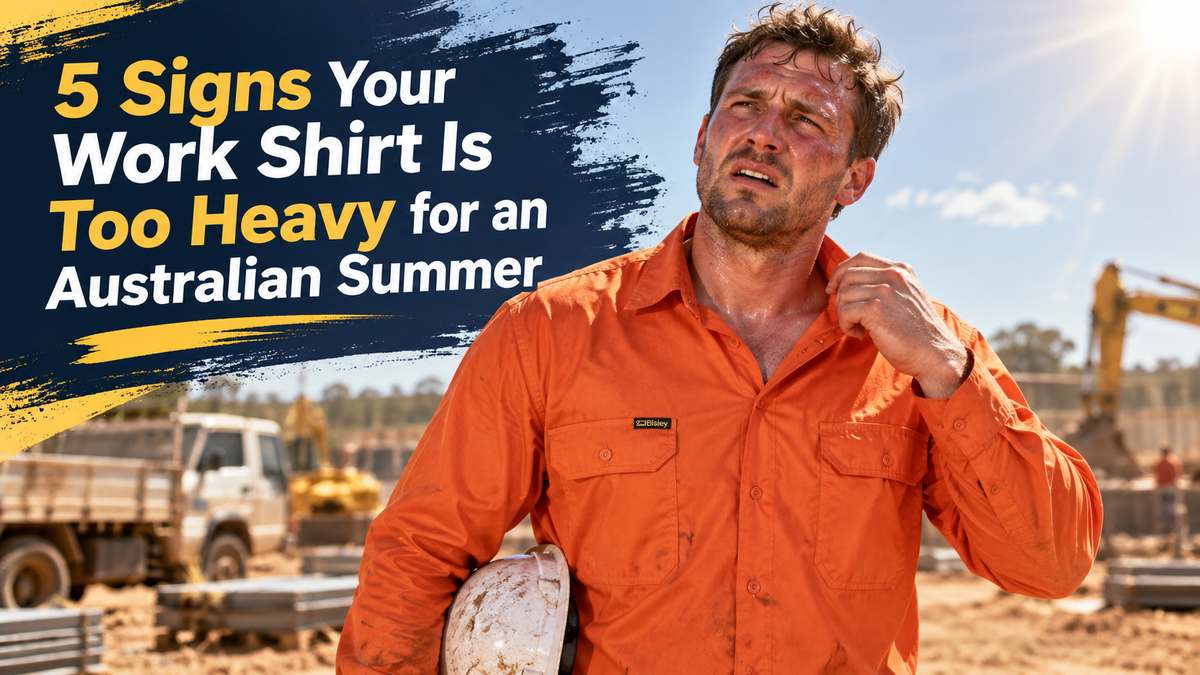
You know the feeling. It is not even smoko yet and the back of your work shirt is already soaked.
The sleeves feel heavier, the fabric is sticking to you and every time you bend, lift or climb, the shirt seems to trap more heat.
Australian summer is demanding enough without wearing a work shirt better suited to cooler months.
A work shirt does not need to be extremely thin to suit hot conditions, but fabric weight, ventilation, fit and construction can make a noticeable difference during long shifts.
So how do you know when your current work shirt might be too heavy for summer?
Here are five signs worth checking before the hotter weather sets in.
1. Your Work Shirt Is Soaked Before Smoko
Sweating is completely normal when you are doing physical work in warm conditions. But if your shirt becomes heavily soaked early in the shift and stays wet for hours, it may be worth looking at what you are wearing.
A heavier shirt with limited airflow can hold moisture around your back, chest and underarms.
That does not mean you should simply buy the thinnest shirt you can find. A better approach is comparing fabric weight, ventilation and construction.
Do Not Judge a Summer Shirt by Sleeve Length Alone
A short sleeve shirt is not automatically lightweight.
You can have a heavier short sleeve cotton drill shirt with very little ventilation, just as you can have a lightweight long sleeve shirt designed specifically for hot working conditions.
When choosing a summer work shirt, check:
- Fabric GSM
- Back ventilation
- Underarm mesh
- Fabric composition
- Fit through the chest and shoulders
- Whether the shirt suits your workplace requirements
For example, lightweight Bisley work shirts are available with lower-weight cotton drill fabrics and ventilation through areas where heat can build during physical work.
2. You Keep Pulling Your Shirt Away From Your Back
If you spend half the afternoon pulling the front of your shirt away from your chest or trying to peel the fabric from your back, your workwear may be telling you something.
Once fabric becomes damp, poor airflow can make the shirt feel heavier and more noticeable against the body.
This is why ventilation placement matters when choosing work shirts for hot Australian conditions.
Why Back and Underarm Ventilation Matters
Your upper back and underarms are areas where heat and sweat can build quickly during physical work.
Some summer-focused work shirts include mesh ventilation or airflow panels through these areas to help air move through the garment.
The Bisley X Airflow Ripstop Shirt BS6414, for example, combines lightweight cotton ripstop fabric with ventilation through key heat-stress areas.
The lesson is simple. Summer workwear is not just about wearing less fabric. It is about choosing a shirt that has been designed with hotter working conditions in mind.
3. Your Shirt Feels Heavier Once You Start Sweating
A dry work shirt can feel completely different after several hours outside.
Once the fabric starts holding sweat, a heavier shirt can become more noticeable across your shoulders, chest and back.
If your shirt regularly feels considerably heavier by lunchtime, check the GSM listed in its product specifications.
What Does GSM Mean in Work Shirts?
GSM means grams per square metre and is used to measure fabric weight.
For example, a 150gsm fabric weighs less per square metre than a 190gsm fabric.
That does not mean a lower GSM is automatically better. Heavier fabrics may still be the appropriate choice for jobs where a more substantial material is needed.
But if your current work shirt feels too heavy during summer, GSM gives you a useful specification to compare when shopping for a replacement.
What GSM Should You Consider for Summer?
There is no single fabric weight that works for every tradie or workplace.
However, lightweight Bisley shirts available through WorkStitch include options around the 140gsm to 155gsm range.
Examples include:
- Bisley Cool Lightweight Drill Shirt BS1893
- Bisley X Airflow Ripstop Shirt BS6414
- Bisley X Airflow Stretch Ripstop Shirt BS6490
The best choice depends on your work environment, site requirements and the level of coverage you need.
4. You Are Adjusting Your Shirt All Day
Rolling your sleeves up every hour. Pulling at the collar. Opening another button. Tugging the shirt away from your body whenever you stop moving.
One adjustment during a shift is normal.
Constantly changing how you wear your shirt can be a sign that the fabric, fit or ventilation is not well suited to the conditions.
The Answer Is Not Simply Buying a Bigger Shirt
An oversized shirt is not automatically better in summer.
Your work shirt should give you enough room to move without becoming excessively loose around tools, equipment or machinery.
Look for practical design features such as:
- Back pleats
- Underarm ventilation
- Mesh airflow panels
- Stretch fabric
- Adjustable cuffs
- Room through the shoulders
- Lightweight fabric construction
These small design details can make a noticeable difference when you are lifting, bending, climbing and reaching throughout the day.
5. You Avoid Wearing That Shirt Whenever the Forecast Looks Hot
This might be the easiest sign to recognise.
You check the forecast before work, see that temperatures are climbing and immediately leave one particular shirt at the bottom of the drawer.
Tradies usually work out pretty quickly which shirts they prefer during a hot week.
The lightweight and vented shirts get worn first. The heavier options stay behind until the washing pile leaves no choice.
If this keeps happening, it might be time to build a proper summer workwear rotation rather than relying on shirts that were better suited to winter or cooler conditions.
Heavy Work Shirt vs Lightweight Summer Work Shirt
| Feature | Heavier Work Shirt | Lightweight Summer Work Shirt |
|---|---|---|
| Fabric weight | Usually higher GSM | Usually lower GSM |
| Hot weather use | Can feel more substantial in heat | Reduced fabric weight can suit warmer conditions |
| Ventilation | Depends on the design | Summer styles may include targeted ventilation |
| Outdoor use | Depends on fabric and coverage | Available in both long and short sleeve styles |
| Best use | Useful when a more substantial fabric is appropriate | Useful when reducing fabric weight and improving airflow is a priority |
Does Lightweight Mean Short Sleeve?
No.
This is one of the most important things to remember when choosing summer workwear.
Lightweight refers to the fabric and construction, not necessarily the sleeve length.
Australian outdoor workers may still prefer long sleeves because they provide more skin coverage from direct sunlight.
A lightweight long sleeve work shirt can provide more coverage while still using lighter fabric and strategically placed ventilation.
If you work mainly indoors or under cover, a short sleeve work shirt may be suitable depending on the job and workplace requirements.
The better choice depends on where you work, how much direct sun exposure you receive and what your site requires.
What Should You Look for in a Summer Work Shirt?
Before buying your next work shirt, do not rely only on the words "cool" or "summer" in the product name.
Look at the actual specifications.
Fabric Weight
Compare the GSM with the shirts you currently wear. If your existing shirt feels too substantial during summer, consider a lower-weight option that still suits your job.
Ventilation
Look for mesh through the back, underarms or other high-heat areas. Strategic ventilation may help improve airflow through the garment.
Fabric Type
Cotton drill, cotton ripstop and stretch ripstop all provide different characteristics. Choose according to the work you actually do rather than assuming one fabric suits every trade.
Fit
A work shirt that is too tight may restrict movement and airflow. One that is far too loose may be unsuitable around certain tools or machinery. Check the manufacturer's size guide before ordering.
Sun Coverage
If you spend most of your day outdoors, consider how much skin the shirt covers as well as how lightweight the fabric is.
Workplace Requirements
Always check whether your role requires hi-vis clothing, reflective tape, particular sleeve coverage or other task-specific clothing.
Do Not Rely on Clothing Alone During Extreme Heat
Choosing a lighter work shirt can help make your summer workwear more suitable for hot conditions, but clothing is only one part of working safely in the heat.
Access to drinking water, shade, cooler rest areas, appropriate work scheduling and workplace heat procedures also matter.
If conditions become extreme, follow your workplace procedures and pay attention to how the heat is affecting you and the people around you.
Is It Time to Retire Your Heavy Work Shirt for Summer?
If your shirt is soaked early, sticking to your back, feeling increasingly heavy, being adjusted all day and constantly losing its place in your weekly rotation, it may no longer be the best choice for hot-weather shifts.
You do not need to abandon proper workwear when summer arrives.
The smarter option is choosing fabric weight, ventilation, coverage and fit according to the conditions you actually work in.
WorkStitch stocks a wide range of Bisley lightweight work shirts, including cotton drill, ripstop, vented, hi-vis, long sleeve and short sleeve options.
Browse men's work shirts at WorkStitch and get your summer rotation sorted before the hottest shifts arrive.


